
Pond Design Fundamentals
“Most natural ponds do not have much of a contour, so mine doesn’t need it either”
What you need to know
A lot of new pond builders look at natural ponds and assume their koi pond can be built the same way—flat bottom, rocks everywhere, no real contouring. After all, nature seems to handle things just fine. But natural ponds work for two big reasons that don’t apply to man‑made koi ponds: they have a very low fish‑to‑water ratio, and they’re constantly refreshed by streams flowing in and out. That steady movement dilutes waste, flushes out toxins, and keeps ammonia and nitrites from ever building up.
A backyard koi pond is a completely different environment. With far more fish per gallon and no natural water exchange, waste settles quickly and begins breaking down on the bottom. Without proper contouring, that waste collects in low spots, creates pockets of harmful toxins, and even produces tannic acid from decaying leaves—turning the water brown over time. Contouring the pond floor helps prevent all of that by guiding debris toward the bottom drains where it can be removed before it becomes a problem.
Pro Tip
The goal is to shape the bottom so everything naturally rolls toward each drain. A gentle slope around each drain creates a bowl or cone that keeps debris moving instead of letting it sit. Since a well‑contoured bottom gives each drain an effective reach of about seven feet, larger ponds will need multiple drains, each with its own “bowl” to keep the system working efficiently.
Thoughtful contouring is one of those design details that most people never think about—but it makes a huge difference in how clean, clear, and healthy your pond stays over time.
Oxygen Generator

Related Products
Custom Pond Designs
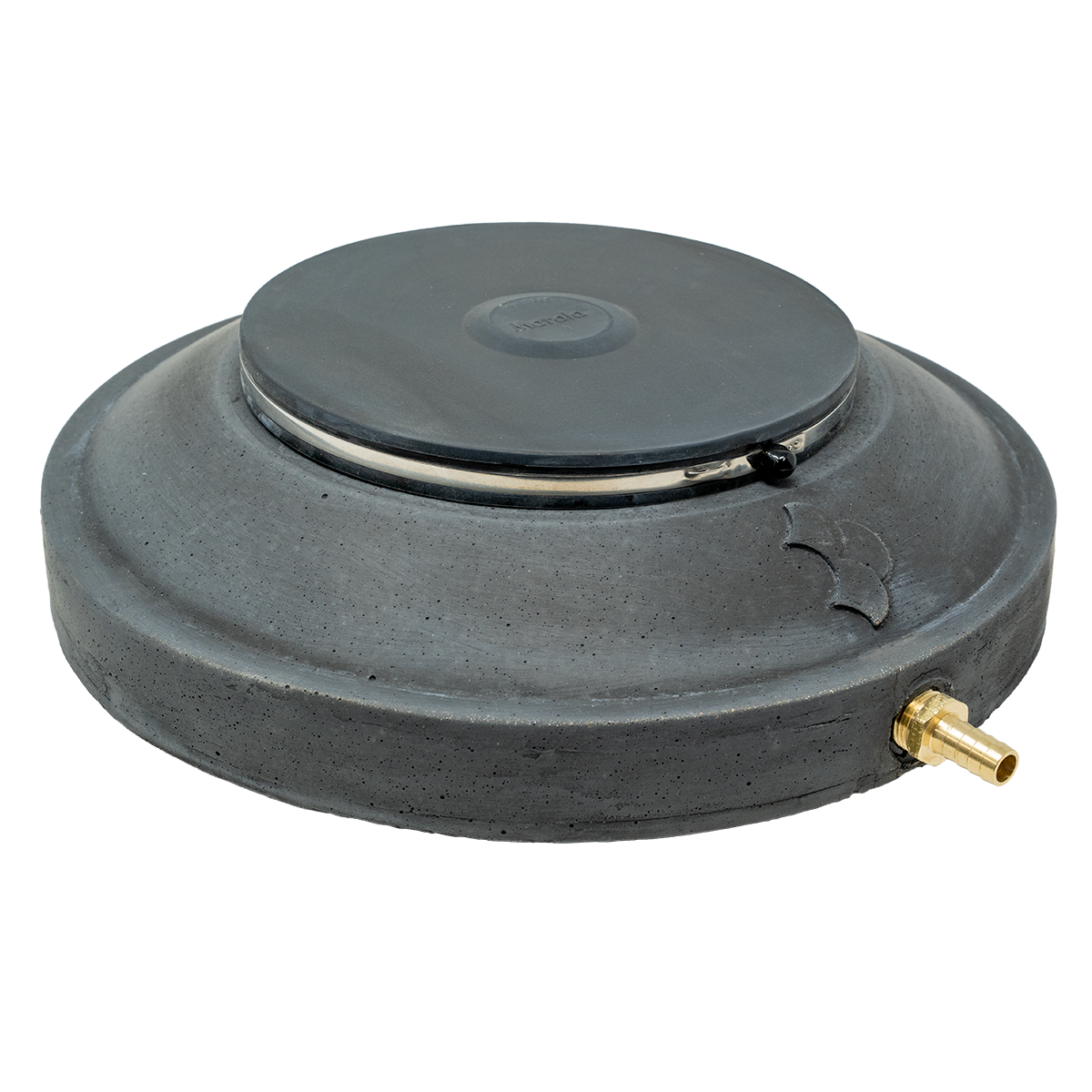
Air Drain Cover