

Why Kaldnes (K1) Media Belongs in a Moving Bed
— Not a Pressurized Canister
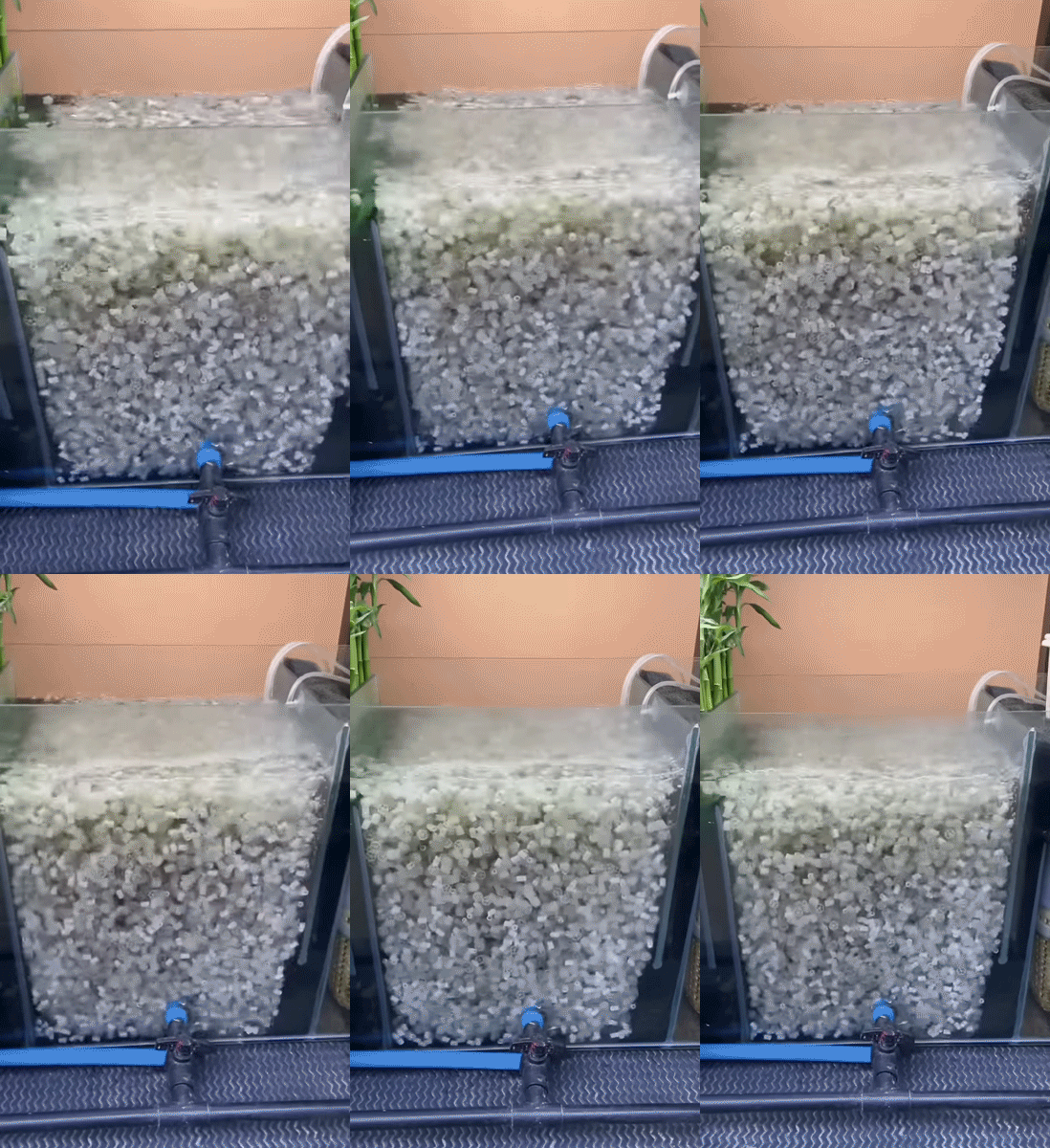
Kaldnes (K1) media is an exceptional biological media when used as intended: in a moving‑bed, highly oxygenated reactor where the media tumbles freely and self‑cleans. Its design maximizes surface area for beneficial bacteria and relies on constant motion and high dissolved oxygen to sustain an active, healthy biofilm.
In a pressurized canister the advantages disappear and become liabilities. K1 media was not designed as a mechanical filter: its large, irregular shapes and internal pockets prevent tight packing and create places where debris can lodge permanently. In a moving‑bed system the tumbling action dislodges and flushes solids; in a pressurized canister the media is immobilized and becomes stagnant, turning a self‑cleaning material into a self‑clogging one.
Oxygen availability and bacterial colonization suffer under pressure. Pressurized systems typically have lower dissolved oxygen than a dedicated moving‑bed reactor, which reduces the media’s ability to support the aerobic bacteria that make K1 so effective. That means slower nitrification and a less robust biological filter.
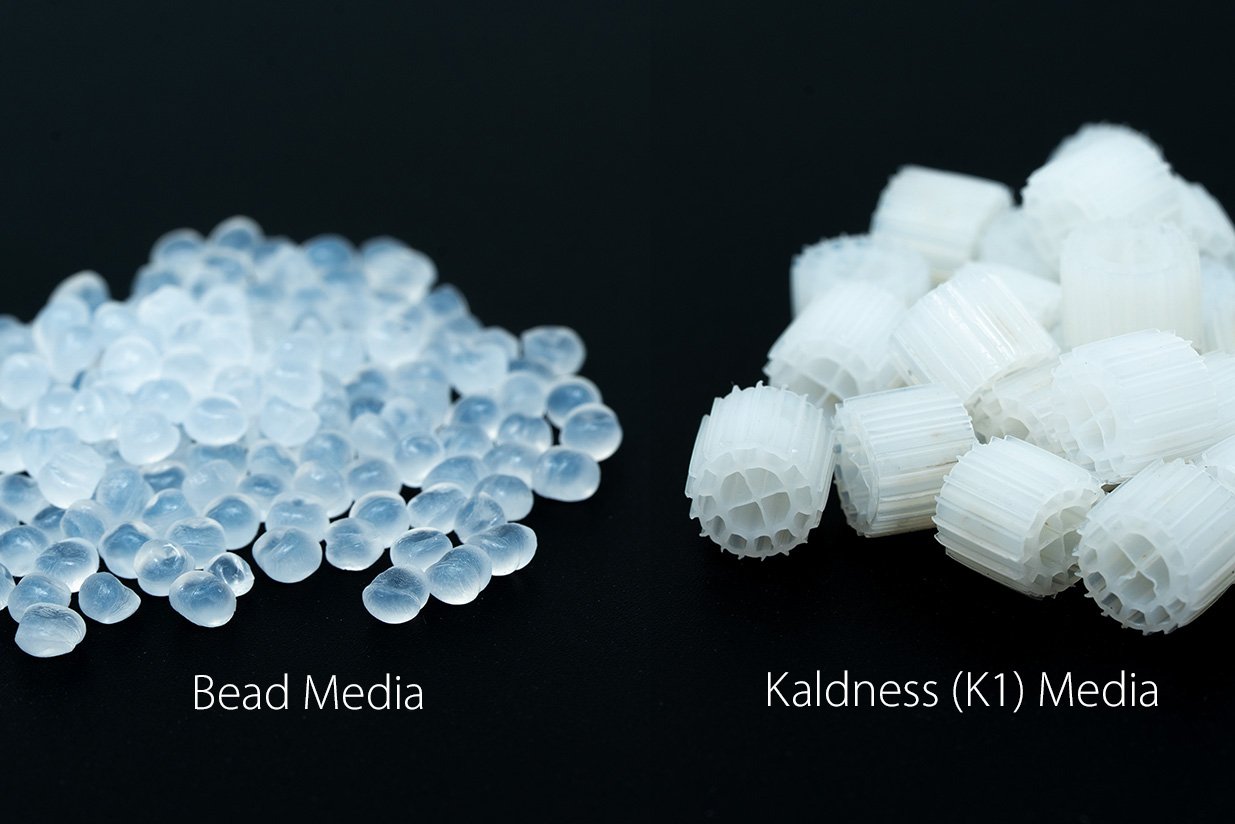
Bead media is engineered for pressurized applications and will outperform K1 in that environment. Under pressure, bead media compacts tightly to provide true mechanical filtration—capturing particles down to the micron range—yet releases trapped debris easily during backwash. Because beads are uniform and designed for static, high‑pressure use, there are no hidden pockets for solids to accumulate, and backwashing reliably clears the bed.
Bottom line: use Kaldnes/K1 where it belongs — in a moving‑bed bio‑reactor with high oxygen and continuous motion. For pressurized canisters and bead filters, choose media specifically engineered for static, high‑pressure filtration to ensure consistent mechanical performance, easy maintenance, and reliable biological support.